Are you wondering what the perfect size for your visiting card should be? Choosing the right visiting card size in inches can make a big difference in how you’re remembered.
Thank you for reading this post, don't forget to subscribe!Your card needs to fit comfortably in wallets and cardholders, while still giving enough space to showcase your details clearly. You’ll discover the ideal dimensions that balance style and practicality. Keep reading to ensure your visiting card leaves a lasting impression every time.
Standard Visiting Card Sizes
Visiting cards are small but important tools for sharing contact details. Their size matters for easy handling and storage. Standard sizes help keep cards neat and professional. Understanding the typical dimensions helps in designing a card that fits wallets and cardholders.
Different countries use slightly different sizes. Knowing these can help when creating cards for global use. Let’s explore the common sizes and regional differences.
Common Dimensions Worldwide
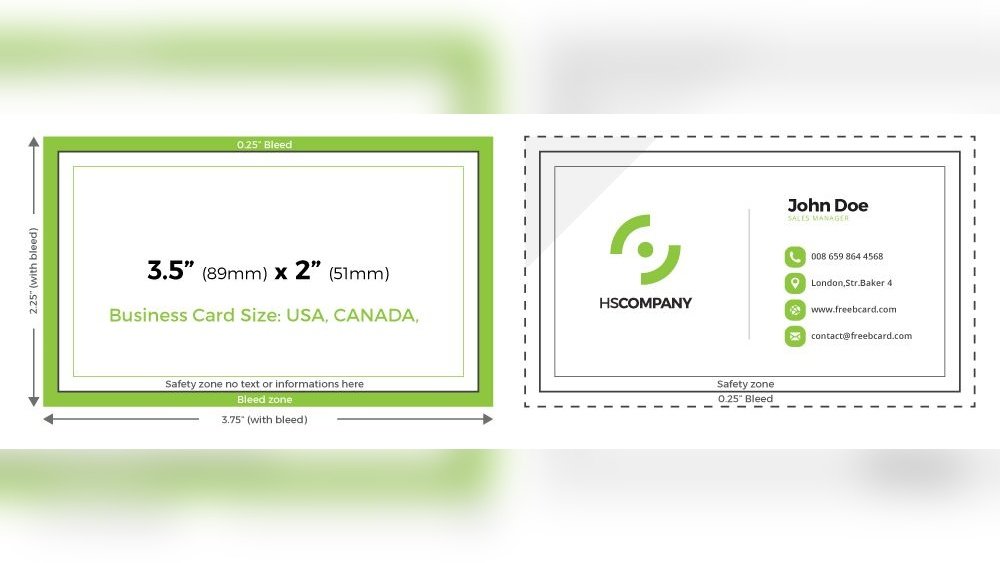
The most common visiting card size is 3.5 inches by 2 inches. This size fits well in most wallets and cardholders. It is easy to carry and offers enough space for basic information. Many businesses prefer this size for its simplicity and convenience.
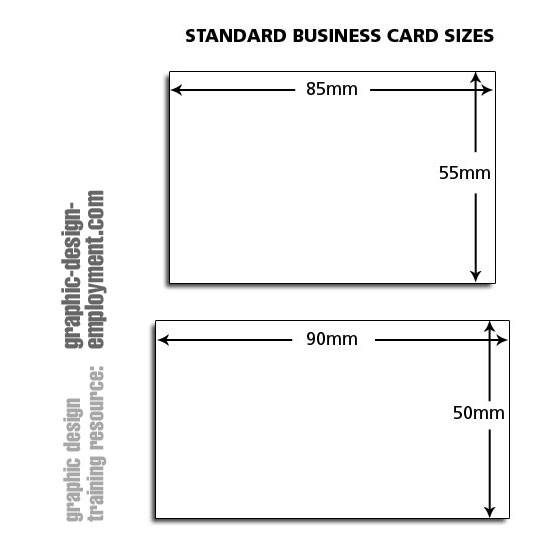
Another popular size is 3.54 inches by 2.17 inches. This is close to the standard but offers a bit more space. Some companies use it for a slightly larger design. Both sizes are widely accepted and easy to print.
Variations By Region
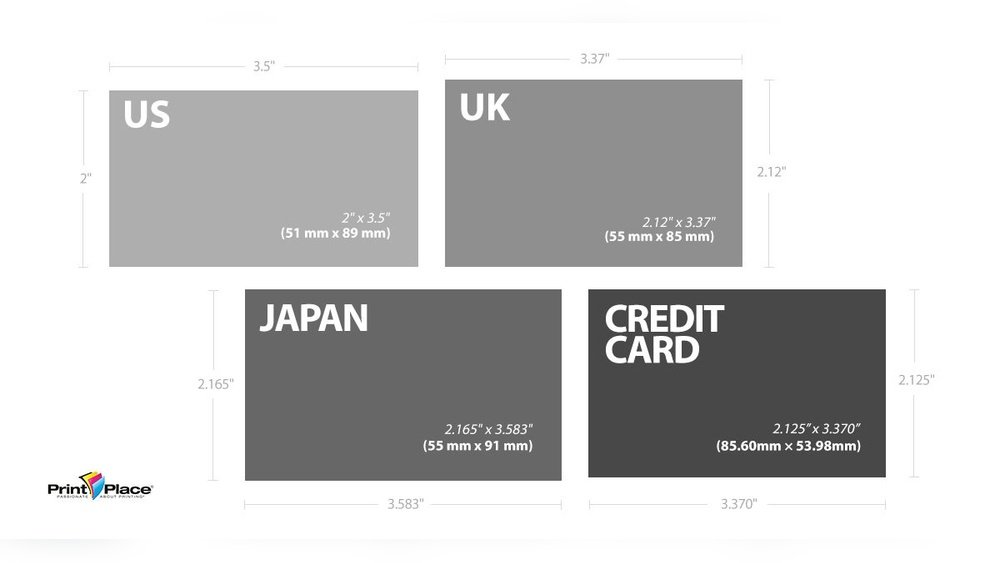
In the United States and Canada, the standard size is 3.5 x 2 inches. It matches the size of credit cards for easy storage. European countries often use a slightly larger size, about 3.35 x 2.17 inches. This size fits well in European wallets.
In Japan, visiting cards are usually 3.58 x 2.17 inches. This size reflects local preferences and printing standards. India uses a common size close to 3.5 x 2 inches but sometimes varies slightly. Knowing these differences helps when designing for specific markets.
Credit: www.graphic-design-employment.com
Choosing The Right Size
Choosing the right visiting card size is important for making a good impression. The size affects how much information fits and how easy the card is to carry. Small cards might fit in wallets better. Large cards can show more details clearly. The choice depends on your needs and style.
Balancing Space And Portability
The card should have enough space for your name, job title, and contact. Too much text on a small card looks crowded. A large card might be hard to carry in a wallet or pocket. The standard size is about 3.5 by 2 inches. This size balances space and ease of carrying well.
Design Impact On Size
Design plays a big role in choosing the card size. Simple designs need less space. Complex logos or images need more room to look good. Keep white space around text for better readability. The size should match the style and message you want to send.
Custom Sizes And Shapes
Custom sizes and shapes for visiting cards break the usual mold. They offer a chance to stand out and show creativity. Choosing unique dimensions can make your card more memorable. It also reflects your personal or business style clearly.
Creative Alternatives
Traditional cards measure 3.5 by 2 inches. Custom shapes include circles, squares, or even triangles. Rounded corners add a soft touch to the card’s look. Die-cut designs can create logos or special shapes. These options catch the eye and invite curiosity. Using thick or textured paper adds to the card’s feel. Creative cards become conversation starters at networking events.
When To Use Custom Dimensions
Custom dimensions suit businesses wanting to appear unique. Artists, designers, and photographers often prefer unusual sizes. They can showcase creativity with a distinct card style. Smaller cards fit easily into wallets or pockets. Larger cards allow more space for details and images. Custom sizes work well at trade shows to grab attention. They help your card not get lost among many others.
Printing Considerations
Printing a visiting card needs careful thought. The size in inches is not the only detail to consider. The design and quality rely on more factors. These printing details affect how the final card looks and feels. Understanding them helps create a professional result.
Two important aspects are bleed and margins, and the choice of paper type and thickness. Each affects the card’s appearance and durability. Let’s explore these key points.
Bleed And Margins
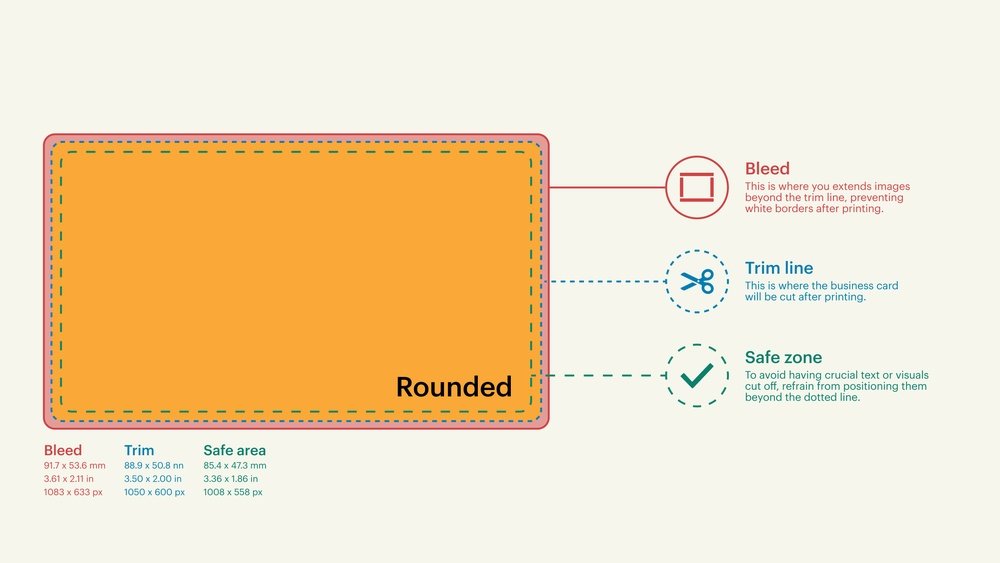
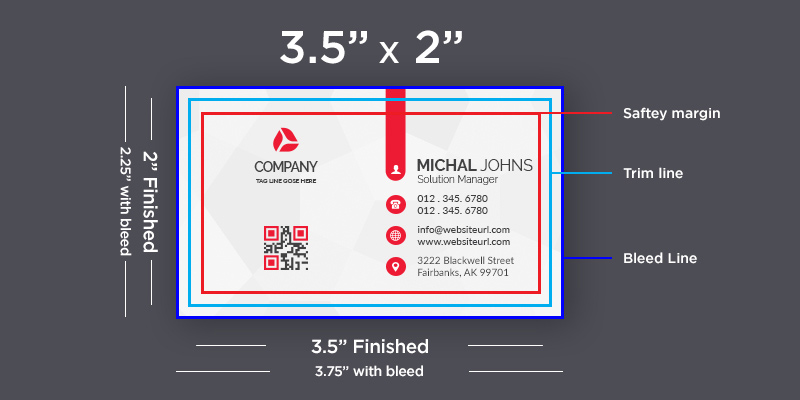
Bleed means extra space around the card’s edges. It lets the printer cut the card without white borders. Usually, bleed is 0.125 inches beyond the card size. Without bleed, small errors can leave unwanted white lines.
Margins keep important text or logos away from edges. This space protects them from being cut off. A safe margin is about 0.125 inches inside the card edge. Always place text and logos within this area for clear visibility.
Paper Types And Thickness
Paper type changes the card’s feel and look. Matte paper has a smooth, non-shiny surface. Glossy paper shines and makes colors pop. Choose based on your style and brand image.
Thickness affects durability. Thicker cards feel more solid and last longer. Card thickness is measured in points (pt). Standard cards use 14-16 pt paper. Thicker cards can be 18-32 pt for a premium feel.
Digital Vs. Physical Cards
Digital and physical visiting cards serve different needs today. Physical cards have a fixed size, often measured in inches. Digital cards offer flexible dimensions and easy sharing. Both types have their place in personal and business networking.
Size Relevance For Digital Sharing
Digital cards do not have a standard size like physical ones. They adapt to screens and apps. This flexibility makes digital cards easy to view on phones and computers. The size depends on the platform or device used. Digital cards can include interactive elements like clickable links. This enhances user experience beyond just size.
Hybrid Approaches
Some people use both digital and physical cards. Physical cards often include QR codes linking to digital versions. This mix helps reach more people easily. Hybrid cards combine the convenience of digital with the personal touch of physical cards. It suits networking events and casual meetings alike.

Credit: www.shutterstock.com
Credit: www.proglobalbusinesssolutions.com
How IOKPRINT Can Help You with Visiting Card Size in Inches
Practical Insights on Visiting Card Size in Inches
Understanding the standard visiting card sizes in inches is not just about aesthetics—it plays a crucial role in how your card is perceived and handled. When choosing the right size, consider how it fits into wallets or cardholders, ensuring ease of use for recipients. Custom sizes and shapes can offer uniqueness but may impact printing costs and storage convenience.
- Standard sizes typically range around 3.5 x 2 inches, balancing visibility and portability.
- Custom shapes require careful printing considerations to maintain durability and professional appeal.
For those exploring physical cards, partnering with a reliable printing service that understands these nuances can simplify the process. Brands like IOKPRINT, offering options such as 1000 business cards at competitive rates with free delivery, can be a valuable resource. Additionally, exploring related products like stickers may complement your branding strategy.
If you have questions about selecting the perfect size or printing details, reaching out via their website www.iokprint.in can provide practical guidance tailored to your needs.
Frequently Asked Questions
What Is The Standard Visiting Card Size In Inches?
The standard visiting card size is 3. 5 x 2 inches. This size fits well in wallets and cardholders.
Why Is Visiting Card Size Important For Printing?
The right size ensures clear text and images. It also saves paper and printing costs.
Can Visiting Card Sizes Vary By Country?
Yes, sizes differ by region. For example, Japan uses smaller cards than the US.
How To Choose The Best Size For A Visiting Card?
Pick a size that fits your style and purpose. Standard sizes work well for most needs.
What Materials Suit The Standard Visiting Card Size?
Paper and cardstock are common choices. They hold the shape and feel professional.
Conclusion
Choosing the right visiting card size in inches matters a lot. It helps your card fit wallets and holders easily. Standard sizes make sure your card looks neat and professional. Small changes in size can affect how people see your brand.
Keep your card simple and clear for a strong impression. Use the right dimensions to stand out without trouble. Remember, a good size helps others remember you better. Make your visiting card size work for you every time.