
When you visit a website or use an app, have you ever stopped to read the Terms of Use? These simple words hold the key to understanding your rights and responsibilities.
Thank you for reading this post, don't forget to subscribe!Knowing what you agree to can protect you from surprises and keep your experience safe and fair. You’ll discover exactly what Terms of Use mean, why they matter to you, and how they affect your online activities. Stick with us, and you’ll feel confident navigating any site or service without confusion or risk.
Purpose Of Terms Of Use
Terms of Use set clear rules for using a website or app. They help users and owners understand their rights and duties. This makes online spaces safer and fairer for everyone.
Without these terms, confusion can happen. Users might not know what is allowed or forbidden. Businesses risk legal problems without clear guidelines.
HTML Syntax:Clear Communication of Rules
Terms of Use explain what users can and cannot do. They tell people how to behave on the site. This stops misuse and protects the website’s content.
HTML Syntax:Protecting Legal Rights
These terms protect the company from lawsuits. They limit the owner’s responsibility for user actions. This creates a legal shield in case of disputes.
HTML Syntax:Building Trust with Users
Clear rules build trust between users and businesses. Users feel safer knowing the site respects their rights. Trust helps keep visitors coming back.
HTML Syntax:Setting Expectations for Use
Terms of Use set what users should expect. They guide users on privacy, content, and payments. This reduces misunderstandings and complaints.
Key Components To Include
Terms of Use set clear rules for using a website or app. They protect both the owner and the user. Including key components helps avoid confusion and legal issues. These parts explain what users must do, who owns the content, and limits on responsibility. Clear Terms build trust and keep the experience smooth for everyone.
User Responsibilities
Users must follow the rules in the Terms of Use. This includes using the site fairly and not causing harm. They should avoid illegal actions or sharing harmful content. Respecting others and the platform keeps the community safe. Users also agree to provide accurate information when required.
Content Ownership
The site owner usually owns the content on the platform. Users may share their content but must grant permission to the owner. This section clarifies who can use, copy, or change the material. It protects original work and prevents misuse. Clear content ownership avoids disputes and respects creators.
Liability Limitations
This part limits the owner’s responsibility for problems on the site. It explains that the owner is not liable for damages from using the service. Users accept the risk of possible errors or downtime. Liability limitations protect the owner from costly legal claims. They set fair boundaries for responsibility.
Customizing Terms For Your Website
Customizing the Terms of Use for your website helps protect your business. Each website is unique. Your Terms should reflect your site’s purpose and audience. Clear, tailored rules reduce confusion. They guide users on acceptable actions and your rights.
General templates often miss key details. Custom Terms cover specific services, products, or content. They also address privacy, payments, and dispute resolution. A well-crafted Terms page builds trust. Visitors feel safer knowing the rules are clear and fair.
Defining User Responsibilities
State what users can and cannot do. Outline rules for posting content or using services. Explain consequences for breaking rules. This keeps your site safe and respectful. Users understand their duties and limits.
Protecting Your Intellectual Property
Describe how your content is protected. Include copyright and trademark information. Explain what users may share or reproduce. Stop unauthorized use of your materials. This helps maintain your brand’s value.
Handling Disputes And Liability
Set rules for resolving conflicts. Mention if arbitration or court action applies. Limit your liability for damages or losses. Clear terms reduce legal risks. Users know what to expect if problems occur.
State your right to change Terms anytime. Explain how users will be notified. Encourage users to review updates regularly. Keeps your Terms relevant and effective. Helps manage changes in laws or services.
Legal Requirements And Compliance
Terms of Use are important to protect websites and users. They set clear rules about how the website should be used. Legal requirements and compliance make sure these rules follow the law. This helps avoid legal problems and builds trust with users.
Every website needs to meet certain legal standards. These rules depend on the country and the type of service offered. Compliance means the Terms of Use are fair, clear, and easy to find. This keeps the website safe and respects user rights.
Understanding Local And International Laws
Different countries have different laws for online content. Some laws protect user privacy. Others control what content can be shown. Websites must follow rules where their users live. Ignoring laws can lead to fines or shutdowns.
Data Protection And Privacy Rules
User data needs strong protection. Many laws require websites to explain how data is used. Terms of Use often include privacy policies. This tells users what data is collected and why. It helps avoid misuse of personal information.
Liability And Disclaimers
Terms of Use limit the website owner’s responsibility. They explain what the website is not responsible for. This can include errors or damages from using the site. Clear disclaimers help reduce legal risks for the owner.
User Rights And Responsibilities
Users have rights and duties on the website. Terms of Use state what users can and cannot do. It includes rules for posting content or behavior. Clear rules help keep the website safe and fair.
Enforcement And Dispute Resolution
Enforcement and dispute resolution are key parts of Terms of Use. They explain how rules are kept and how problems get solved. Clear guidelines help avoid confusion and protect both parties. Understanding these parts can save time and reduce conflicts.
Enforcement Of Terms
Enforcement means making sure everyone follows the rules. If someone breaks the Terms, the company can take action. This might include warnings, suspending accounts, or legal steps. The goal is to keep the service safe and fair for all users.
Methods Of Dispute Resolution
Disputes happen when two sides disagree. Terms of Use often suggest ways to solve these problems. Common methods include negotiation, mediation, or arbitration. These methods are faster and cheaper than court trials.
Importance Of Clear Procedures
Clear procedures guide users on what to do next. They explain how to report issues and the steps after that. This clarity builds trust and helps settle disputes smoothly. Everyone understands their rights and responsibilities better.
Credit: termly.io
Common Mistakes To Avoid
Terms of Use are important for any website or app. Many make mistakes when creating these rules. These errors can cause legal problems or confuse users. Avoiding common mistakes helps protect your site and users. Clear, simple Terms of Use build trust and reduce risks.
Not Using Clear Language
Complex words and long sentences confuse readers. Use simple words and short sentences instead. Write so everyone understands. Clear language helps users follow your rules easily.
Missing Important Sections
Some leave out key parts like privacy, user rights, or dispute rules. Each section protects your site and users. Include all necessary topics to cover risks and rights.
Copying From Other Sites
Copying Terms from other websites can cause legal trouble. Each business is different and needs unique rules. Write original Terms that fit your service and audience.
Not Updating Regularly
Old Terms may not cover new laws or features. Update your Terms often to stay current. Regular updates keep your rules fair and legal.
Ignoring User Consent
Users must agree to your Terms before using your service. Not asking for consent can create legal risks. Make sure users accept your Terms clearly.
Updating Terms Over Time
Terms of Use need updates over time to stay relevant. Laws change. Business practices evolve. Technology advances. These changes require updates to keep users informed and protected.
Regularly updating Terms of Use helps build trust. It shows users that the website or service cares about fairness and transparency. Clear communication prevents confusion and legal issues.
Why Update Terms Regularly?
Updating Terms regularly reflects new laws and rules. It adapts to business changes and new services. It helps protect both the company and users. Outdated terms can cause problems and misunderstandings.
How To Notify Users About Changes
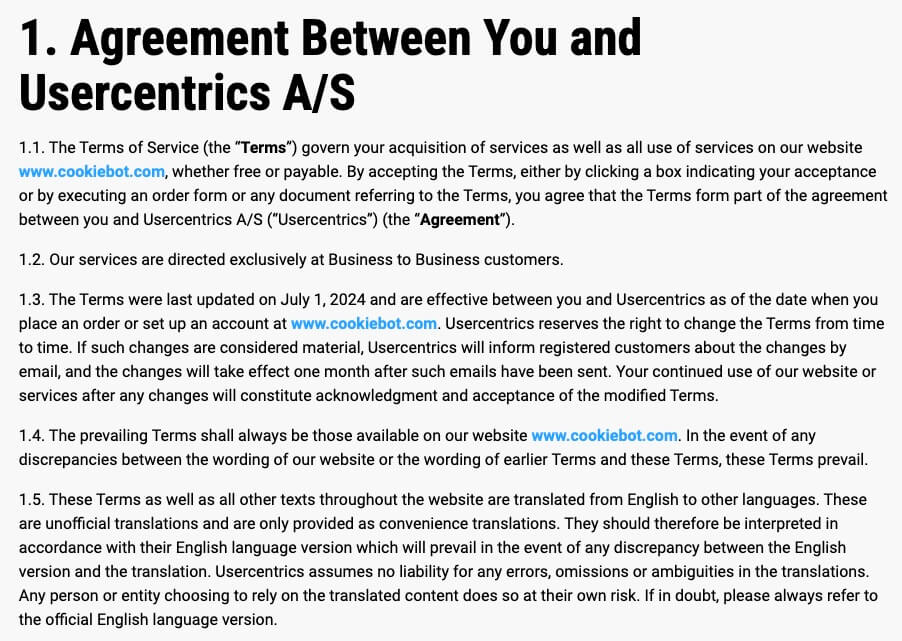
Notify users clearly and simply. Use email alerts or pop-up messages on the website. Make the update date visible on the Terms page. This keeps users aware of the latest rules.
Best Practices For Updating Terms
Keep language simple and clear. Highlight important changes. Allow users time to read updates before they take effect. Avoid confusing legal jargon. Make sure updates follow all laws.
Credit: usercentrics.com
Credit: www.termsfeed.com
Frequently Asked Questions
What Are Terms Of Use And Why Do They Matter?
Terms of Use are rules that guide how users can use a website or service. They protect both the user and the business by setting clear expectations. Without them, misunderstandings and legal issues may occur.
How Do Terms Of Use Protect Website Owners?
They limit the owner’s liability and set conditions for content use. This helps prevent misuse and clarifies what users can and cannot do. It acts as a legal shield for the website owner.
Can Users Violate Terms Of Use Accidentally?
Yes, users might break rules without knowing it. That’s why Terms of Use are written to be clear and easy to follow. Ignorance of these rules usually doesn’t excuse violations.
What Happens If Someone Breaks The Terms Of Use?
The website owner can suspend or block the user’s access. Legal actions may follow if the violation is serious. It ensures the site stays safe and fair for all.
Are Terms Of Use The Same As Privacy Policy?
No, Terms of Use focus on user behavior and site rules. Privacy Policy explains how user data is collected and used. Both are important but serve different purposes.
How Often Should Terms Of Use Be Updated?
They should be reviewed and updated regularly, at least once a year. Changes in law or services often require updates. Keeping them current protects both users and owners.
Can Users Negotiate Terms Of Use?
Usually, no. These terms are standard agreements set by the website. Users must accept them to use the service, without changes or negotiations.
Conclusion
Terms of Use help protect both users and website owners. They explain what is allowed and what is not. Reading them carefully avoids confusion and problems later. Everyone should know their rights and responsibilities online. Clear rules make the internet safer and fairer for all.
Take time to understand these terms before using any service. This small step keeps your experience smooth and secure. Trust grows when rules are clear and fair. Stay informed, stay safe.
